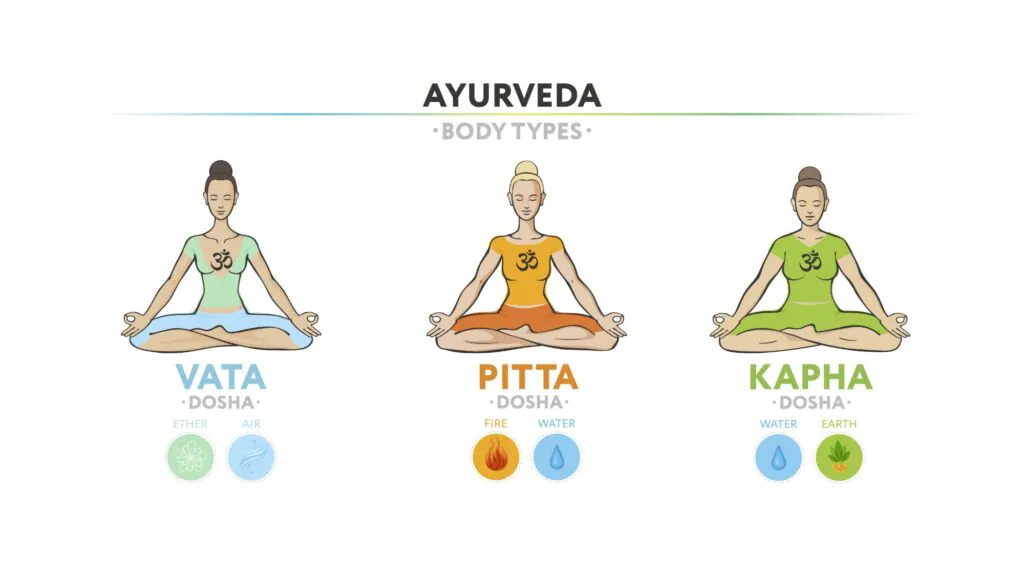
We all experience the world differently. Some people thrive in warm weather, while others prefer cooler climates. Some crave sweets, others avoid them entirely. Some digest food easily, while others struggle. Even our emotional tendencies—toward calmness, intensity, or lethargy—vary widely.
Ayurveda, the ancient science of life, explains these differences through the concept of doshas—fundamental energies that shape our body, mind, and personality.
Though we are all part of a greater whole, Ayurveda teaches that each of us expresses that wholeness in a unique way.
What’s your dosha? Take the quiz.
The Ayurvedic View: Microcosm and Macrocosm
A foundational Ayurvedic principle comes from the Sanskrit sutra “Yat Pinde Tat Brahmande”, meaning “as is the microcosm, so is the macrocosm.” In essence, what exists in the universe also exists within us.
According to Ayurveda, everything in nature—including the human body—is composed of five elements:
- Air
- Water
- Space (Ether)
- Fire
- Earth
These elements combine to form three vital bio-energies known as doshas: Vata, Pitta, and Kapha. Understanding your dosha makeup offers insight into your physical tendencies, emotional patterns, and natural rhythms.
What Is Prakruti?
Your prakruti is your unique constitution—your inherent balance of the three doshas. Ayurveda teaches that prakruti is determined at conception and remains relatively stable throughout life.
Most people have one or two dominant doshas. When we live in alignment with them, we experience greater balance, vitality, and ease. When lifestyle, diet, stress, or environment push doshas out of balance, discomfort and illness can arise.
Vata Dosha: Movement and Change
Elements: Air + Space
Qualities: Light, dry, mobile, creative
Vata governs all movement in the body and mind—from circulation and breathing to thoughts and communication.
Vata Characteristics
- Lean or thin body type
- Dry skin and hair
- Creative, imaginative, energetic
- Sensitive to cold
- Quick-moving mind, prone to restlessness
- Seat of Vata: Colon, pelvis, nervous system, bones, skin
Signs of Vata Imbalance
- Dry skin
- Constipation
- Anxiety or fear
- Irregular sleep
- Joint pain
- Restlessness
Balancing Vata
- Maintain a consistent daily routine
- Prioritize rest and sleep
- Practice gentle yoga, walking, or swimming
- Meditate daily to calm the mind
- Favor warm, moist, nourishing foods
- Stay hydrated with warm liquids
- Use grounding oils like sesame or olive oil
Discover breathing techniques that calm the nervous system in our Breathwork & Meditation Retreat.
Pitta Dosha: Transformation and Metabolism
Elements: Fire + Water
Qualities: Hot, sharp, intense, focused
Pitta governs digestion, metabolism, and mental clarity.
Pitta Characteristics
- Medium build
- Warm body temperature
- Strong digestion
- Intelligent, driven, natural leaders
- Prone to irritability when stressed
Seat of Pitta: Small intestine, liver, skin, eyes, blood
Signs of Pitta Imbalance
- Excess body heat
- Acid reflux
- Skin rashes
- Anger or irritability
- Insomnia
- Excessive hunger or thirst
Balancing Pitta
- Avoid overexertion and excessive heat
- Practice cooling breathing techniques and meditation
- Eat regularly to avoid irritability
- Favor sweet, bitter, and cooling foods
- Stay hydrated
- Spend time in nature, especially near water
Kapha Dosha: Structure and Stability
Elements: Earth + Water
Qualities: Heavy, slow, steady, nurturing
Kapha provides strength, lubrication, and emotional grounding.
Kapha Characteristics
- Solid or thick-set build
- Calm, affectionate, steady
- Strong immunity
- Slower metabolism
- Prone to weight gain
Seat of Kapha: Chest, lungs, stomach, joints
Signs of Kapha Imbalance
- Lethargy
- Weight gain
- Excess sleep
- Congestion
- Low motivation
- Emotional attachment or stagnation
Balancing Kapha
- Engage in regular physical activity
- Favor light, warm, spicy, or bitter foods
- Avoid heavy, cold, or overly sweet foods
- Practice energizing breathwork
- Avoid daytime naps
- Maintain an active, stimulating routine
Discover Your Dosha Balance
Understanding your dosha predominance is a powerful first step toward living in harmony with your natural constitution.
An Ayurveda Lifestyle Consultation offers personalized guidance to help you align your diet, routine, and self-care practices with your unique needs.
An experienced Ayurvedic practitioner will assess your constitution and work with you to create a personalized wellness plan.