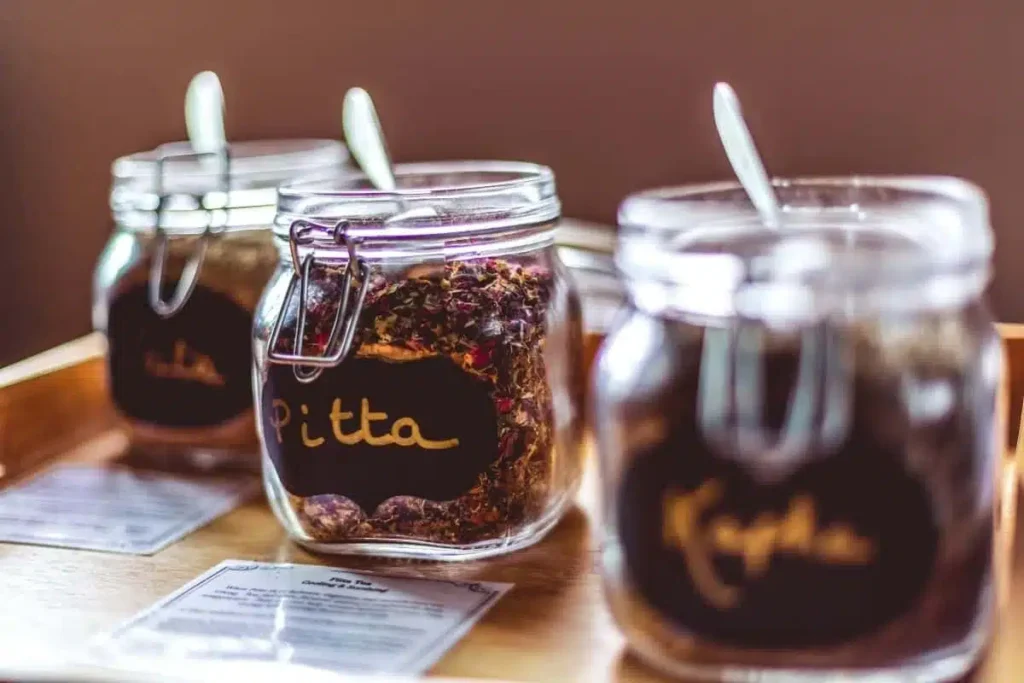
What are the benefits of using essential oils in Ayurveda? They are plentiful.
In Ayurvedic practice, oils are more than pleasant scents — they are therapeutic tools used to calm the nervous system, nourish the tissues, support sleep, and promote emotional balance. When used in daily self-massage (abhyanga), the right oils can help you feel more grounded, clear, and restored.
Many people also report benefits such as
- Better sleep
- Healthier-looking skin
- Reduced stress and tension
- Improved overall sense of well-being
Because Ayurveda is personalized, oil selection depends on your dosha.
- Vata and Kapha types typically benefit from warming oils, especially sesame.
- Pitta types, often more intense or heat-prone, generally respond well to cooling oils like coconut or olive.
If you’re building your home self-massage ritual, these three essential oils are wonderful places to begin.
Patchouli Essential Oil: Relax and Ground
Patchouli is prized in Ayurveda for its deeply grounding and emotionally soothing qualities. Its rich, earthy aroma helps settle nervous energy and support emotional stability.
Traditionally Associated Benefits
- Helps ease stress and nervous tension
- Supports emotional balance
- Encourages creativity and presence
- May support healthy digestion and metabolism
- Offers natural antibacterial properties
Patchouli is especially supportive for vata imbalance, when the mind feels scattered, anxious, or overstimulated.
Rosemary Essential Oil: Uplift and Clarify
Rosemary has long been valued for its stimulating and clarifying properties. In both traditional herbalism and modern aromatherapy, it is often associated with mental sharpness and renewed energy.
Traditionally Associated Benefits
- Supports memory and cognitive function
- Helps counter mental fatigue
- Encourages alertness and focus
- Supports healthy hair and scalp care
- May help ease occasional headaches
Its bright, herbaceous scent makes rosemary particularly helpful when you feel foggy, sluggish, or mentally drained.
Sandalwood Essential Oil: Calm and Center
Few oils are as revered in Ayurveda as sandalwood. Used for thousands of years in spiritual and beauty rituals, sandalwood is known for its profoundly calming and cooling qualities.
Traditionally Associated Benefits
- Deeply calms the mind and nervous system
- Supports meditation and inner focus
- Helps soothe irritated or sensitive skin
- Cooling effect helps balance excess heat
- Promotes emotional steadiness
Sandalwood is especially supportive for pitta types or anyone experiencing irritability, overheating, or restlessness.
How to Use Essential Oils in Ayurvedic Self-Massage
For best results, essential oils are typically diluted into a carrier oil such as
- Sesame (warming)
- Coconut (cooling)
- Olive (moderately warming)
Simple Abhyanga Method
- Warm your carrier oil gently.
- Add 2–5 drops of essential oil per tablespoon of carrier oil.
- Massage into skin using long strokes on limbs and circular motions on joints.
- Allow oil to absorb for 10–20 minutes before bathing or showering.
Listen to your body and never force the practice.
A Note on Preparing (Curing) Oils
In traditional Ayurveda, oils are sometimes gently heated before use to enhance absorption and effectiveness.
To prepare,
- Warm the oil until just heated (not smoking).
- Remove from heat and allow to cool to a comfortable skin temperature.
- Store in an airtight container.
Always test the temperature before applying oil to the skin.
Bring Ayurvedic Oil Rituals Into Your Life
Incorporating essential oils into your daily routine can be a simple yet powerful way to support balance. With consistent use, abhyanga becomes more than self-care — it becomes a grounding ritual that reconnects body, mind, and breath.