John Cordle, a highly experienced captain in the U.S. Navy, was leading a routine training exercise in the Baltic Sea. He had been awake for 36 hours. As his guided-missile destroyer moved forward in low light and silence, exhaustion finally took over—and he drifted off.
Moments later, his navigator woke him: the ship had lost its position. Dazed and fatigued, Cordle ordered the vessel to slow down, but three ships behind him also depended on his decisions.
“I let myself get so tired that when the crew really needed me, I was too tired to understand what was going on,” Cordle later said in the RAND Review. “There’s this perception that you can just push through. But it’s like being drunk—your brain shuts down.”
His story is not unique. Sleep deprivation affects millions of people every day—and its consequences are far more serious than simple fatigue.
According to a study by RAND, insufficient sleep costs the U.S. economy $411 billion annually in lost productivity.
Why Good Sleep Is Essential
Sleep is not just rest—it is an active, restorative process.
During sleep, the body
- Repairs tissues and muscles
- Regulates hormones
- Strengthens the immune system
- Consolidates memory and learning
- Clears metabolic waste from the brain.
Lack of sleep can affect nearly every organ system. It can lead to
- Mood swings and irritability
- Poor focus and memory
- Reduced productivity
- Increased stress
- Higher risk of hypertension, heart disease, and mood disorders.
Simply put, sleep is one of the body’s most powerful healing tools.
Understanding the Sleep Cycle
Sleep occurs in two primary phases:
- Non-REM sleep (three stages)
- REM sleep (rapid eye movement)
These stages repeat in cycles throughout the night.
Non-REM Sleep
Stage 1: Light sleep. Heart rate, breathing, and brain activity begin to slow.
Stage 2: Deeper relaxation. Body temperature drops, and brain waves slow further.
Stage 3 (Deep Sleep): The most restorative stage. Heart rate and breathing are at their slowest, and it is difficult to wake someone.
REM Sleep
About 90 minutes after falling asleep, the body enters REM sleep where
- Dreams occur
- Brain activity increases
- Eyes move rapidly
- Heart rate and breathing rise.
During this stage, the body temporarily paralyzes the muscles to prevent acting out dreams.
Factors That Affect Your Sleep
Age
Infants spend much more time in REM sleep. As we age, REM sleep decreases, and sleep may become more fragmented.
Sleep Quantity
Irregular or insufficient sleep disrupts the natural sleep cycle and reduces restorative stages.
Alcohol and Drugs
Alcohol may make you drowsy at first, but it disrupts sleep quality and REM cycles, often leading to daytime fatigue.
Light Exposure
Light regulates the body’s circadian rhythm—the internal clock that controls sleep and wake cycles.
Artificial light from screens and indoor lighting can confuse this rhythm, making it harder to fall asleep.
Jet Lag and Shift Work
Travel across time zones or working night shifts disrupts the body’s natural sleep-wake patterns.
Sleep Disorders
Conditions such as sleep apnea, restless leg syndrome, and diabetes can interfere with restorative sleep.
Natural Remedies for Better Sleep
Beyond reducing screen time and avoiding a culture of overwork, here are science-supported ways to improve sleep quality.
Yoga Nidra: Deep Rest in a Short Time
If you’re sleep-deprived, stressed, or mentally exhausted, yoga nidra can offer profound rest in a short time.
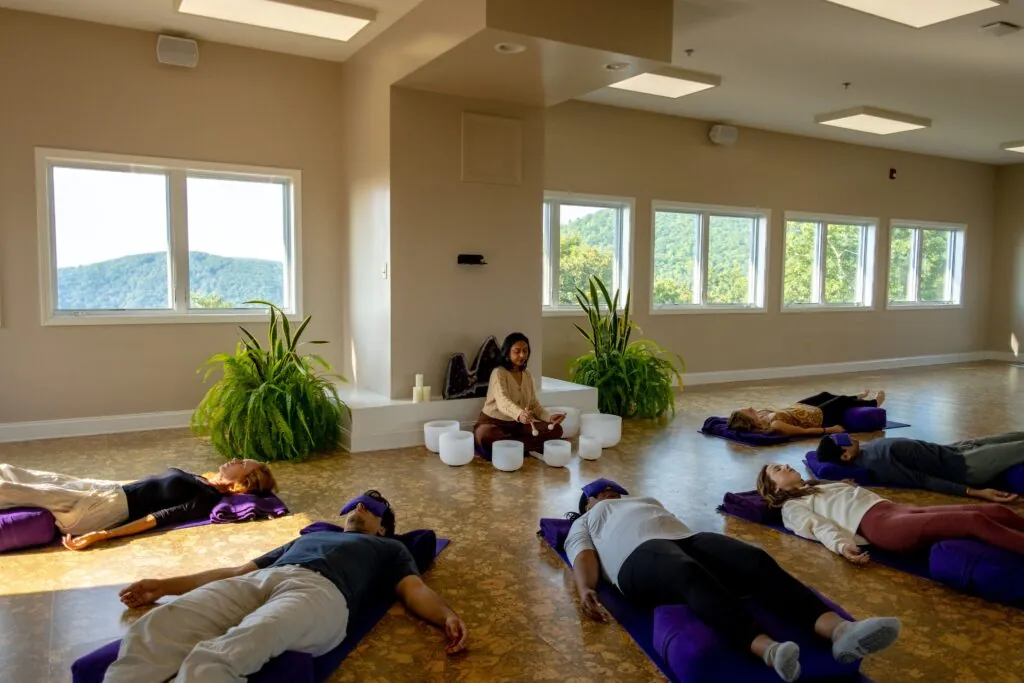
Often called “yogic sleep,” yoga nidra is a guided meditation practiced lying down. In about 20–30 minutes, it can bring the body into a deeply restorative state.
How Yoga Nidra Works
During yoga nidra, you are guided to
- Lie comfortably on your back
- Follow gentle instructions
- Move your awareness slowly through different parts of the body
- Synchronize breath and attention.
This process activates the relaxation response and shifts the nervous system from stress mode to rest mode.
What Happens in the Brain During Yoga Nidra
Yoga nidra gradually shifts brainwave activity:
Beta waves:
Active, thinking state.
Alpha waves:
Relaxed, calm awareness. Serotonin levels increase, improving mood.
Theta waves:
Dream-like state where creativity and emotional processing occur.
Delta waves:
Deep restorative state associated with physical repair.
Yoga nidra allows the body to access these deeply restorative states while maintaining awareness, which is why many people feel refreshed after a short session.
When to Practice Yoga Nidra
Yoga nidra can be practiced
- After a yoga session or workout
- During the afternoon as a restorative break
- Before bed to improve sleep quality
Wait about 20–30 minutes after meals before practicing.
Additional Practices to Improve Sleep
Practice Gentle Yoga
Regular yoga practice can
- Reduce stress
- Improve sleep quality
- Ease symptoms of sleep disorders
Breathing techniques like Bhramari (bee breath) or Ujjayi (victory breath) calm the nervous system and prepare the body for rest.
Get Morning Sunlight
Spending time in natural light helps reset the circadian rhythm and improves nighttime sleep.
Limit Daytime Naps
If you nap, keep it under 30 minutes to avoid disrupting nighttime sleep.
Follow Your Body’s Natural Cues
When you feel sleepy, go to bed. Ignoring these signals can delay sleep.
Avoid Stimulants at Night
- Limit caffeine and nicotine in the evening.
- Avoid heavy meals close to bedtime.
Ayurvedic Sleep Support
Some traditional remedies may support better sleep. Always consult an Ayurvedic practitioner before trying them.
- Warm milk with cumin and licorice before bed
- Triphala with honey at night
- Cooling drinks after mentally exhausting days
Prepare Your Bedroom for Rest
A sleep-friendly environment should be
- Dark
- Quiet
- Cool but comfortable
- Clean and uncluttered/
Darkness signals the body to release sleep hormones and prepare for rest.
The Ideal Bedtime According to Ayurveda
Ayurveda recommends going to bed around 10:00 pm, when the body naturally enters its nightly repair phase.
Staying up past this time can redirect energy away from the body’s restoration processes, making sleep more difficult.
Rest Is Not a Luxury—It’s a Necessity
Improving sleep doesn’t require drastic changes. Small, consistent habits—like yoga, sunlight exposure, and mindful evening routines—can dramatically improve sleep quality.
If sleep problems persist, consult a sleep specialist or qualified practitioner.
And when time is short, even 20 minutes of yoga nidra can provide the deep rest your body and mind are craving.