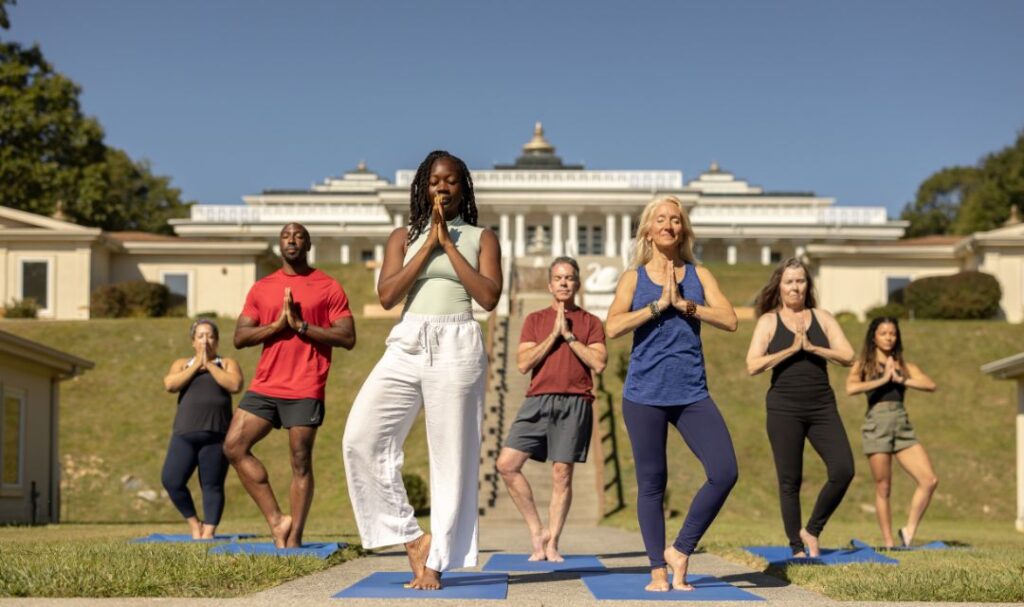
Some mornings, your attention belongs to everyone else before you’ve even gotten out of bed. You check a message, glance at the news, and remember something you meant to finish yesterday. By breakfast, you’re already juggling half the day. A short yoga practice offers a chance to spend a few minutes with yourself first. You don’t need an elaborate routine or a sunrise wake-up call. A little movement, comfortable breathing, and time to notice how you feel can give your morning a different pace.
This ten-minute practice is a simple place to begin.
Can Yoga Help With Focus?
There’s research worth paying attention to, although the promises sometimes go further than the findings.
In a small University of Illinois study involving 30 college-aged women, participants performed better on tests of working memory and the ability to resist distraction after a yoga session than after aerobic exercise or a baseline assessment. The study examined the immediate effects of a 20-minute session; it didn’t establish that ten minutes of morning yoga improves focus throughout the day.
Another randomized trial, involving 118 older adults, found improvements in working memory and the ability to shift between mental tasks after eight weeks of regular hatha yoga classes. That program involved hour-long classes three times a week—a more substantial practice than the brief routine below.
These findings offer encouraging reasons to explore yoga. For a short home practice, a useful starting point is simply to give your attention one thing to do at a time: feel a movement, notice a breath, or look steadily at a point in front of you.
Before You Begin
Choose a comfortable space with room to move. Have a sturdy chair nearby for seated movements and balance support. If you use a mat, place it on a surface where it won’t slide.
Move within a comfortable range, breathe normally, and skip anything that causes pain or dizziness. If an injury, health condition, or pregnancy affects how you move, ask a qualified instructor or healthcare professional about appropriate modifications. Yoga can often be adapted to individual needs.
The timing below includes transitions. There’s no need to squeeze in extra repetitions.
Your 10-Minute Morning Yoga Routine
1. Arrive and Notice Your Breath
1 minute
Sit comfortably in a chair or on a cushion. Let your hands rest on your thighs and allow your shoulders to soften.
Keep your eyes open or close them if that feels comfortable. Notice the support beneath you and the movement of your breath.
You don’t need to take the deepest breath possible or follow a particular count. Allow breathing to remain easy.
When your attention wanders, return to the feeling of breathing.
2. Seated Cat-Cow
2 minutes
Sit toward the front of a sturdy chair, with your feet resting on the floor and your hands on your thighs.
- As you inhale, gently lift your chest and allow a small arch through your upper back.
- As you exhale, round your back slightly and let your chin lower.
- Continue slowly, keeping the movement comfortable and your neck relaxed.
Explore a small range at first. Morning stiffness doesn’t need to be stretched away all at once.
During the final few breaths, return to an upright seat and notice how you feel.
3. Gentle Standing Reach and Side Stretch
2 minutes
Stand with your feet about hip-width apart, and your knees relaxed. You can also remain seated for this movement.
- Inhale and raise your arms as far as feels comfortable.
- Exhale and lower them.
- Repeat a few times without lifting your shoulders toward your ears.
Then rest your left hand on your hip or the chair. Raise your right arm and lean gently to the left, keeping your torso facing forward. Take a couple of easy breaths, return to center, and change sides.
Use a smaller movement or keep your hands on your hips if raising your arms is uncomfortable. Finish upright, with both arms relaxed.
4. Supported Tree Pose
2 minutes—about 1 minute per side
Stand beside a wall or sturdy chair, close enough to use it for support.
- Shift your weight onto your left foot.
- Turn your right knee slightly outward and place your right heel against your left ankle, keeping your right toes on the floor.
- Rest one hand on the chair or wall.
- Look at a steady point in front of you and breathe comfortably.
If you’re familiar with tree pose and feel stable, you may place your foot against your inner calf, avoiding the knee joint.
Release, stand on both feet for a moment, and switch sides.
Wobbling is part of balancing. Use as much support as you need, and bring your foot down whenever you want to.
5. Rest and Take Stock
3 minutes
Sit comfortably or lie down with any support you need. If you’re lying on your back, a pillow beneath your knees may feel good.
Let your breathing return to its natural rhythm. Notice where your body meets the chair or floor.
You may feel more awake, a little quieter, or much the same as when you began. Give yourself a moment to notice without trying to produce a particular result.
Before finishing, consider one simple question: What deserves my attention first today? Allow time to sit up or stand slowly before moving on.
Make the Practice Fit Your Morning
A routine becomes easier to return to when it fits the life you actually have. You might practice after brushing your teeth or while the coffee brews. Set out your chair or mat the night before if that helps. If mornings are unpredictable, choose another time; you haven’t missed your opportunity to practice because the sun is already up.
On a rushed day, you can shorten the sequence. A minute of breathing and a few comfortable movements still give you time to check in with yourself.
As you become familiar with the routine, notice what you enjoy and what you need help adapting. A teacher can offer guidance on movement, breathing, and ways to make the practice comfortable for your body.
Explore Your Practice in the Mountains
At the Art of Living Retreat Center, our Sacred Mountain Yoga Retreat offers time to explore yoga through accessible postures, breathwork, meditation, and yogic wisdom. We welcome beginners and experienced practitioners, with guidance from certified Art of Living teachers. Practicing away from everyday responsibilities gives us space to ask questions, try something unfamiliar, and discover what we want to continue at home.
For now, your practice can begin with ten minutes. Put your phone aside, find a comfortable seat, and give yourself a little time before the day gets going.