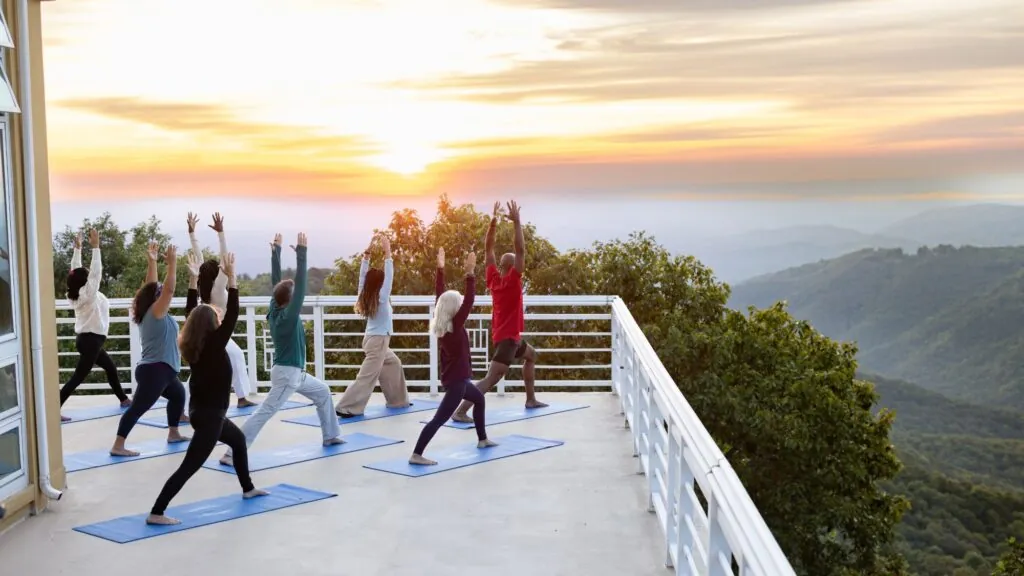
One of the most overlooked areas supported by yoga is the organs of sight — the eyes.
Just as yoga can be tailored to ease lower back discomfort or neck tension, specific practices can also help support eye comfort and visual function. Often called eye yoga, these gentle movements and relaxation techniques are designed to reduce strain, support the eye muscles, and promote overall visual well-being.
In today’s screen-centered world, many people experience digital eye strain, dryness, fatigue, and tension around the eyes. Eye yoga offers a simple, natural way to give your eyes the mindful break they deserve.
Can Eye Yoga Improve Vision?
Eye yoga practices are traditionally used to
- Reduce eye fatigue and strain
- Support healthy circulation around the eyes
- Relax overworked ocular muscles
- Improve focus and visual awareness
- Calm the nervous system.
Some practitioners report improvements in comfort and clarity, particularly when eye strain is related to prolonged screen use or muscular tension.
While corrective lenses help compensate for refractive errors such as myopia (nearsightedness) and hypermetropia (farsightedness), eye yoga focuses on supporting the functional health and relaxation of the eye muscles and surrounding tissues.
Important: Eye yoga is a supportive wellness practice and is not a cure for refractive errors or eye disease.
Guided Eye Yoga Practice
Before you begin
- Sit comfortably with your head and spine upright
- Relax the face, jaw, and shoulders
- Move the eyes gently — never strain
- Blink naturally throughout the practice
Consistency and ease matter far more than intensity.
5-Minute Eye Yoga Routine
Perfect for: screen fatigue, mid-day reset, evening wind-down
1. Palming (1 minute)
Rub your palms together to create warmth. Cup them gently over closed eyes without pressure. Breathe slowly and allow the eyes to soften.
2. Conscious Blinking (30 seconds)
Blink slowly and fully 10–15 times. This helps re-lubricate the eyes and reduce dryness from screen time.
3. Horizontal Eye Movements (1 minute)
Keeping the head still, look
- Far right → far left
- Repeat slowly 8–10 times
- Blink between rounds.
4. Near–Far Focus (1 minute)
Hold one finger about 10 inches from your face.
- Focus on the finger.
- Shift gaze to something far away.
- Alternate slowly 10 times.
5. Gentle Eye Circles (1 minute)
Slowly rotate the eyes in a full circle
- 5 rounds clockwise
- 5 rounds counterclockwise
- Blink and relax
6. Rest (30–60 seconds)
Close the eyes and relax completely.
Pro tip: Less effort = better results.
Digital Eye Strain: Why Your Eyes Are So Tired
If your eyes feel dry, heavy, or blurry at the end of the day, you may be experiencing digital eye strain (sometimes called computer vision syndrome).
Common symptoms include
- Dry or watery eyes
- Blurred vision
- Eye fatigue
- Headaches
- Neck and shoulder tension.
When we stare at screens, we tend to blink less and hold the eye muscles in fixed patterns for long periods. Over time, this can lead to tension and visual fatigue.
Eye yoga helps by
- Encouraging natural blinking
- Moving the eyes through their full range
- Promoting muscular relaxation
- Giving the nervous system a reset.
Do You Need to Rest After Eye Yoga?
After brief eye movements, you can usually return to your day right away. However, after a longer or more relaxing session, it’s beneficial to give your eyes time to integrate the practice.
Try
- Resting quietly with eyes closed for 1–2 minutes.
- Practicing Savasana (Corpse Pose).
- Going deeper with Yoga Nidra.
Allow the breath to remain natural and the eyes to soften completely.
Who Benefits Most from Eye Yoga?
These practices can be especially supportive for
- People who spend long hours on screens
- Professionals experiencing digital eye strain
- Students and avid readers
- Anyone with tired or overworked eyes
- Wellness seekers looking for natural self-care tools.
In our modern, screen-focused lives, consciously relaxing the eyes is a powerful and often overlooked wellness habit.
Gentle Guidelines for Safe Practice
- Practice regularly but without force
- Keep movements slow and smooth
- Blink often to keep eyes hydrated
- Stop if you feel pain, dizziness, or strain
- Consult an eye care professional for persistent vision concerns
Small, consistent practices tend to create the most sustainable benefits.
Disclaimer: While regular yoga practice can support overall well-being, it is not a substitute for professional medical care. Always consult a qualified healthcare provider for any eye condition. Learn and practice yoga under the guidance of a trained teacher whenever possible.